
Smoked salmon nutrition comparison is more than a curiosity—it’s the key to understanding how your favorite fish fits into a healthy diet. Smoked salmon is famous for its rich flavor and silky texture, but not all types share the same nutritional value. The difference between lightly and fully smoked salmon goes beyond taste—it affects calories, sodium, and even omega-3 levels.
In this article, we’ll explore the nutrition facts of smoked salmon, comparing protein, fat, and nutrient content across smoking styles. You’ll learn which type offers the healthiest balance, how the smoking process impacts nutrition, and what to look for on labels. Whether you’re counting calories or just curious about the health benefits, this smoked salmon nutrition comparison will guide your choices.

Want to try smoking your own salmon at home? Learn more about easy techniques in our guide on How to Smoke Salmon at Home. And for more food inspiration and updates, follow us on Facebook—your daily source for smart cooking ideas.
Table of Contents
Understanding Smoked Salmon Nutrition
What Makes Smoked Salmon Different Nutritionally
A solid smoked salmon nutrition comparison begins with how the smoking process changes the fish. When salmon is smoked, moisture is removed and flavors deepen, concentrating nutrients like protein and fat. But smoking also raises sodium levels, especially in fully smoked salmon. Lightly smoked salmon, on the other hand, keeps more moisture and offers a softer texture with milder taste and less salt.
These differences are what make a smoked salmon nutrition comparison so important. Lightly smoked salmon usually has fewer calories and less sodium, while fully smoked salmon delivers a richer flavor and denser nutrient profile. Wild salmon also adds another layer—leaner and higher in omega-3s—making the nutrition facts of smoked salmon a fascinating mix of variables worth understanding.
Is Smoked Salmon as Nutritious as Regular Salmon?
When asking, Is smoked salmon as nutritious as regular salmon?, the answer is mostly yes. Both forms offer top-quality protein, essential omega-3 fatty acids, and valuable vitamins like B12 and D. The main difference revealed in every smoked salmon nutrition comparison is sodium. Smoking enhances taste but adds salt, which can be a concern if consumed frequently.
Still, smoked salmon remains an excellent, nutrient-rich choice. Balancing portions and pairing it with fiber-rich foods like avocado or whole-grain toast can help manage sodium while keeping meals flavorful and satisfying.
Overview of Calories in Smoked Salmon Types
Calories vary based on how salmon is smoked. Lightly smoked salmon generally contains 120–140 calories per 3-ounce serving, while fully smoked versions average 150–160 calories due to water loss and fat concentration. These calorie differences are key when analyzing calories in smoked salmon types.
| Type of Smoked Salmon | Calories (100g) | Protein (g) | Fat (g) | Sodium (mg) |
|---|---|---|---|---|
| Lightly Smoked Salmon | 180 | 22 | 9 | 650 |
| Fully Smoked Salmon | 210 | 23 | 11 | 1000 |
| Fresh Salmon | 190 | 20 | 12 | <100 |
As this smoked salmon nutrition comparison shows, lightly smoked varieties are better for sodium-conscious eaters, while fully smoked types offer a deeper, savory flavor. For a balanced, protein-rich meal idea, discover great ideas like this nutritious recipe on Smoked Salmon and Egg.
The Smoking Process and Its Nutritional Impact
How Smoking Affects Protein and Omega-3 Levels
The smoked salmon nutrition comparison starts with understanding how smoking influences the fish’s nutrients. Both hot and cold smoking preserve salmon’s natural protein and omega-3 content, but temperature and time make a difference. Lightly smoked salmon is exposed to lower heat, helping it retain more omega-3 fatty acids and moisture. Fully smoked salmon, processed at higher temperatures, can lose a small amount of healthy fats but gains a stronger flavor and firmer texture.
That’s why many diet-conscious eaters see lightly smoked salmon as the healthier pick—it keeps its delicate balance of protein, fat, and heart-friendly omega-3s while maintaining a mild taste that pairs well with most dishes.
Nutrient Retention in Lightly Smoked vs Fully Smoked Salmon
When comparing nutrition facts of smoked salmon, the smoking intensity directly impacts nutrient density. Fully smoked salmon is slightly higher in calories and sodium due to its reduced water content, while lightly smoked salmon tends to have fewer calories but retains more omega-3 oils.
This small difference matters when evaluating overall health benefits. In short, lightly smoked salmon offers a fresher, lower-sodium option, while fully smoked salmon delivers deeper flavor and longer shelf life. Both fit well into a balanced diet, but lightly smoked salmon edges out in most smoked salmon nutrition comparison charts for its nutrient preservation.
If you’re curious about how smoking style shapes nutrition, discover great insights in our guide on Lightly Smoked vs Fully Smoked Salmon.
Comparing Lightly Smoked and Fully Smoked Salmon
Lightly Smoked Salmon Nutrition: Is It Healthier?
In any smoked salmon nutrition comparison, lightly smoked salmon usually ranks as the healthier choice. Because it’s smoked at lower temperatures, it retains more omega-3 fatty acids, protein, and vitamins than heavily processed varieties. Lightly smoked salmon also contains less sodium, fewer calories, and more natural oils—factors that stand out in nearly every nutrition facts smoked salmon chart.
This style of salmon offers a fresher taste and smoother texture, making it perfect for health-focused meals. For people asking is lightly smoked salmon healthy?, the answer is yes—especially if you’re aiming for high-quality protein with fewer additives.
Fully Smoked Salmon Nutrition: Key Differences
Fully smoked salmon, however, tells a slightly different story in a smoked salmon nutrition comparison. The longer, hotter smoking process increases sodium and calorie density while reducing moisture and some delicate nutrients. You’ll get a firmer texture and stronger flavor but at the cost of higher salt levels.
That said, fully smoked salmon remains a protein-rich, omega-3-packed food that fits well into most diets when eaten moderately. Whether you prefer the subtlety of lightly smoked or the depth of fully smoked, both bring valuable nutrients to the table—just in different ratios.
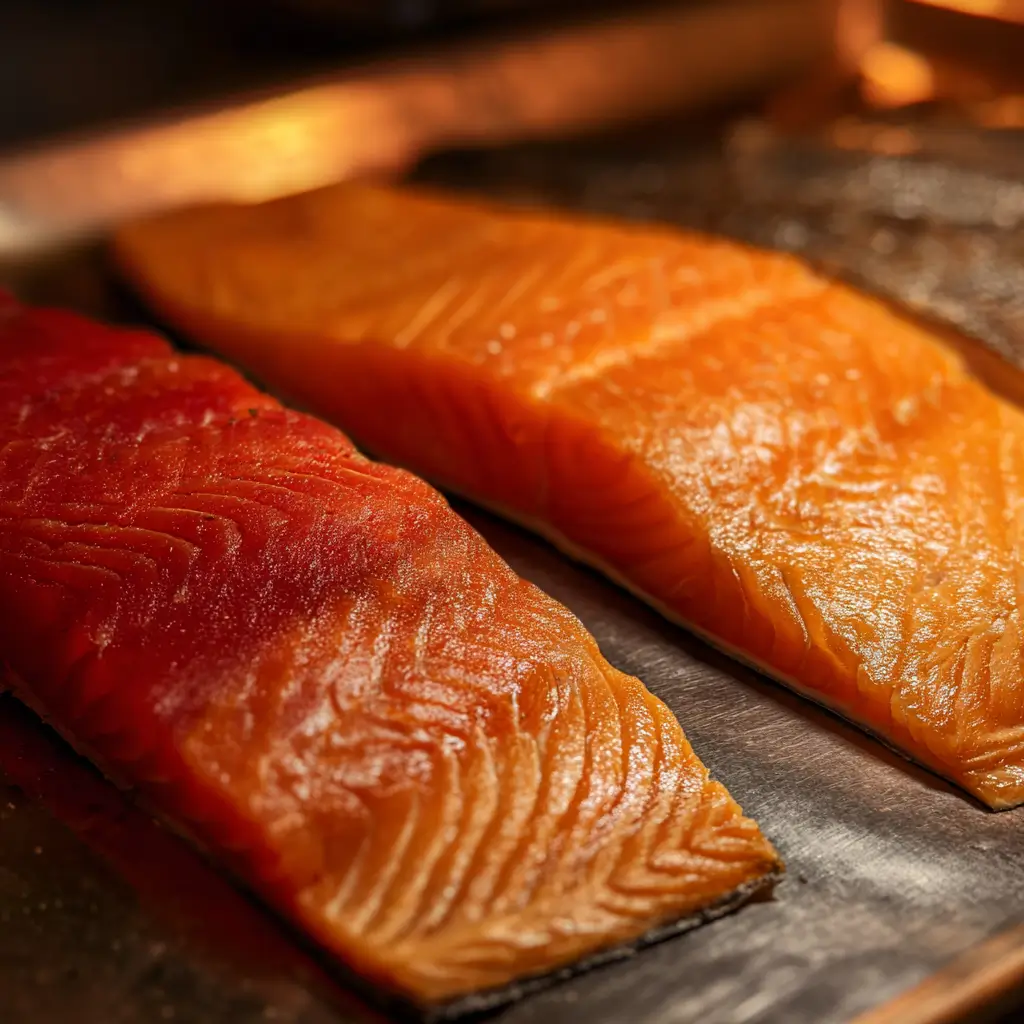
For more insight into these differences, learn more about our guide on Lightly Smoked vs Fully Smoked Salmon.
Calories and Macronutrient Breakdown
Protein Content and Fat Ratio in Different Smoked Salmon Types
When doing a smoked salmon nutrition comparison, calories and macronutrients reveal how smoking intensity shapes the fish’s nutritional profile. Lightly smoked salmon typically contains fewer calories and less fat than fully smoked salmon, thanks to its higher water content. However, both offer an impressive protein-to-fat ratio that supports muscle health and balanced energy levels.
Protein in smoked salmon remains stable during the smoking process—about 20–23 grams per 100 grams—but fat concentration increases slightly in fully smoked versions as water evaporates. This makes the flavor richer, but it also boosts calorie density. That’s why understanding calories in smoked salmon types can help you make better dietary choices without giving up taste.
Carbohydrates and Fiber in Smoked Salmon Varieties
When it comes to nutrition facts smoked salmon, carbs and fiber aren’t major factors. Smoked salmon contains almost no carbohydrates, making it an excellent option for keto, low-carb, and paleo diets. Instead, the balance of healthy fats and lean protein provides steady energy and keeps you full longer.
Here’s a quick smoked salmon nutrition comparison for calories and macronutrients per 100 grams:
| Type | Calories | Protein (g) | Fat (g) | Carbs (g) | Sodium (mg) |
|---|---|---|---|---|---|
| Lightly Smoked Salmon | 180 | 22 | 9 | 0 | 650 |
| Fully Smoked Salmon | 210 | 23 | 11 | 0 | 1000 |
Fully smoked salmon is higher in calories due to fat concentration and sodium increase, while lightly smoked salmon offers a milder, leaner option. Both remain nutrient-dense sources of protein and omega-3s, which makes them great additions to a healthy diet.
For a balanced way to enjoy smoked salmon, check out this creative breakfast idea using both light and full-smoke varieties: Smoked Salmon and Egg.
Sodium, Preservatives, and Additives
Why Sodium Levels Are Higher in Smoked Salmon
One of the most noticeable findings in any smoked salmon nutrition comparison is the sodium content. Smoking relies on curing—usually with salt—to preserve the fish and enhance flavor. This process, while effective, dramatically increases sodium levels. Fully smoked salmon often contains 900–1200 mg of sodium per 100 grams, compared to less than 100 mg in fresh salmon.
Lightly smoked salmon generally uses less curing salt, making it a better choice for those concerned about heart health or water retention. However, both types still contribute essential nutrients like protein and omega-3 fatty acids, balancing the salty trade-off. Reading labels carefully can help you spot versions with lower sodium or fewer preservatives.
Balancing Taste and Health: Reducing Salt Intake
Maintaining flavor while keeping sodium under control is key to a smart smoked salmon nutrition comparison. Choosing lightly smoked salmon or rinsing pre-packaged slices briefly under cold water can reduce excess salt. Pairing smoked salmon with potassium-rich foods—like avocado or leafy greens—also helps balance sodium naturally.
Many brands now offer “low-sodium” options, keeping the taste while cutting the salt by nearly half. These are especially valuable for people who love smoked salmon but want to stay mindful of daily sodium limits. When evaluating nutrition facts smoked salmon, lower-salt versions are a smart compromise between health and flavor.
If you’re experimenting with your own cures, looking for inspiration? Try making your own low-sodium rub from this guide: Homemade Smoked Salmon Rub. It’s an easy way to control both flavor and sodium levels while keeping your smoked salmon nutrition comparison on the healthy side.

Smoked Salmon Nutrition Comparison: Lightly vs Fully Smoked
Equipment
- nutrition scale for weighing portions
- nutrition label/chart to compare macronutrients
Ingredients
- 100 g lightly smoked salmon
- 100 g fully smoked salmon
Instructions
- Compare the calorie, fat, and sodium content of both lightly and fully smoked salmon using a nutritional chart.
- Assess health goals: choose lightly smoked salmon for lower sodium, or fully smoked for richer flavor.
- Incorporate your preferred salmon type into meals such as salads, grain bowls, or breakfasts.
Notes
Nutrition
Omega-3 and Micronutrients in Smoked Salmon
Essential Omega-3 Fatty Acids: Benefits and Retention
When performing a smoked salmon nutrition comparison, omega-3 fatty acids are one of the biggest points of interest. These essential fats support heart health, brain function, and inflammation control. Both lightly and fully smoked salmon are rich in omega-3s, though lightly smoked salmon tends to retain slightly more due to its gentler processing.
A 100-gram serving of smoked salmon provides roughly 1.5 to 2 grams of omega-3s, which easily covers most of your daily needs. The difference in content between lightly and fully smoked salmon is small but meaningful—particularly if you’re eating it regularly. That’s why many dietitians consider lightly smoked salmon a top choice for maintaining healthy fat intake while still enjoying smoky flavor.
Vitamin and Mineral Differences Between Lightly and Fully Smoked Salmon
Beyond fats, the nutrition facts of smoked salmon also include vital micronutrients such as vitamin D, vitamin B12, and selenium. Vitamin D supports bone health and immunity, while B12 boosts energy and nerve function. Lightly smoked salmon preserves slightly more of these nutrients because the lower smoking temperature helps minimize heat loss.
Fully smoked salmon, on the other hand, still provides plenty of these nutrients—just at marginally lower levels due to prolonged exposure to heat. Both types offer substantial nutritional value, but lightly smoked salmon generally ranks higher in most smoked salmon nutrition comparison tables.
If you’d like to explore nutrient-rich ways to enjoy salmon, don’t miss our beginner-friendly guide on Beginner Smoked Salmon Recipe, which highlights simple, healthy preparations that preserve omega-3s and key vitamins.
Is Lightly Smoked Salmon Healthy?
Analyzing “Is Lightly Smoked Salmon Healthy?” with Evidence
A key question in any smoked salmon nutrition comparison is whether lightly smoked salmon is truly healthy. The answer is yes—when enjoyed in moderation. Lightly smoked salmon is packed with high-quality protein, omega-3 fatty acids, and essential vitamins like D and B12. Since it’s smoked at lower temperatures, it retains more of these nutrients than heavily processed or fully smoked versions.
Unlike some cured meats, lightly smoked salmon provides healthy fats instead of saturated ones. It supports heart health, muscle maintenance, and even skin vitality. The only real concern in the nutrition facts smoked salmon profile is sodium—but lightly smoked varieties typically contain 30–40% less salt than fully smoked ones. That makes it a smart choice for flavor lovers who still want to prioritize wellness.
Best Ways to Incorporate Lightly Smoked Salmon into a Balanced Diet
Including lightly smoked salmon in your meals can be both nutritious and simple. Add it to salads, grain bowls, or omelets for a quick protein boost without extra cooking. Pairing it with fiber-rich vegetables, avocado, or whole-grain toast creates a balanced plate that supports energy and heart health.
A smoked salmon nutrition comparison shows that lightly smoked versions fit perfectly into most diets—including keto, low-carb, and Mediterranean plans. The key is portion control and variety. Two to three servings per week can deliver consistent omega-3s without excessive sodium.

For inspiration on how to enjoy it deliciously, learn more about our flavorful recipe here: Lightly Smoked Salmon Recipe. It’s an easy, wholesome dish that highlights everything great about lightly smoked salmon nutrition.
Cultural and Dietary Considerations
Why Do Jews Eat Smoked Salmon? A Cultural Insight
A fascinating element of any smoked salmon nutrition comparison is the cultural history behind it—especially within Jewish cuisine. Smoked salmon, often called “lox,” became a beloved staple in Jewish communities in the early 20th century. It was affordable, preserved well without refrigeration, and paired perfectly with bagels and cream cheese.
Beyond tradition, it also provided valuable nutrients. The nutrition facts smoked salmon made it ideal for families needing convenient protein and healthy fats. Over time, it became a symbol of comfort and heritage—proof that good nutrition and cultural roots can coexist beautifully. Today, smoked salmon remains a centerpiece in Jewish delis and brunches across the U.S., celebrated for both its flavor and its nutritional value.
Smoked Salmon in Mediterranean, Keto, and Low-Carb Diets
Modern diets continue to highlight the importance of understanding smoked salmon nutrition comparison for balanced eating. In the Mediterranean diet, smoked salmon serves as a lean, omega-3-rich protein that replaces red meat. For keto and low-carb eaters, it’s almost perfect—packed with protein and healthy fats, with virtually no carbohydrates.
Lightly smoked salmon works especially well for those managing sodium, while fully smoked salmon satisfies deeper flavor preferences. Both types can be used in salads, wraps, or breakfast bowls, delivering high protein without excess calories. Whether you follow a heart-healthy, low-carb, or high-protein plan, calories in smoked salmon types fit neatly within most nutrition goals.
If you’re exploring creative ways to include salmon in different meal plans, discover great ideas like these healthy snack recipes: Easy Salmon Recipe Bites. They’re light, flavorful, and perfect for quick, balanced meals.
FAQs About Smoked Salmon Nutrition Comparison
Is smoked salmon as nutritious as regular salmon?
In most smoked salmon nutrition comparisons, smoked salmon is nearly as nutritious as fresh salmon. It delivers the same protein, omega-3s, and vitamins, but has more sodium due to curing. Choosing lightly smoked salmon lowers salt while keeping most nutrients intact.
Is 100g of smoked salmon a lot?
Not really. 100g (about 3.5 oz) is a typical serving that fits easily into a balanced diet. According to nutrition facts smoked salmon, it provides around 200 calories, over 20g of protein, and heart-healthy omega-3s—perfect for a light meal.
Why do Jews eat smoked salmon?
Smoked salmon, or “lox,” became a Jewish favorite for its long shelf life and rich nutrition. Beyond tradition, the smoked salmon nutrition comparison shows it’s still valued for its protein, healthy fats, and versatility in meals.
What’s the difference between smoked salmon and normal salmon?
Smoked salmon is cured and smoked for flavor and preservation, while fresh salmon is untreated. Smoking adds sodium but enhances taste. Lightly smoked salmon retains more nutrients and fewer calories than fully smoked, making it the healthier option in most smoked salmon nutrition comparison guides.
For more on this topic, check out our guide: Fully Smoked Salmon Explained.
Conclusion: What the Smoked Salmon Nutrition Comparison Really Tells Us
After reviewing this full smoked salmon nutrition comparison, one truth stands out—both lightly and fully smoked salmon offer impressive nutritional benefits, but lightly smoked salmon has the edge for health-conscious eaters. It keeps more omega-3s, contains less sodium, and preserves essential vitamins, all while delivering that familiar smoky flavor.
Fully smoked salmon remains an excellent protein source and an easy, flavorful addition to everyday meals. Whether you’re watching sodium or chasing that rich, savory taste, both types can fit beautifully into a balanced diet.
When comparing nutrition facts of smoked salmon, the best choice depends on your goals: lightly smoked for nutrient retention, fully smoked for intensity and convenience. Balance, portion control, and variety make the difference.
For more inspiring salmon recipes and tips, discover more food ideas on our Pinterest page — your destination for healthy, flavorful meal inspiration.