Tools for smoking salmon are the key to transforming a simple cut of fish into a gourmet delicacy that rivals what you’d find in top restaurants. Whether you’re drawn by the deep, savory aroma or that melt-in-your-mouth texture, learning how to smoke salmon at home is easier than it looks — especially when you have the right equipment. From the best smoker for salmon to smoking salmon equipment like thermometers, racks, and wood chips, each tool plays an important role in achieving perfect flavor and consistency.
In this guide, we’ll explore everything you need — from essential supplies to pro tips — so you can create beautifully smoked salmon right in your backyard. Along the way, we’ll share expert recommendations, setup ideas, and even a few maintenance tricks that will make the process easier and more enjoyable.
Discover great ideas like this beginner smoked salmon recipe if you want to start simple before upgrading to more advanced tools and techniques.
Table of Contents
Understanding the Basics of Smoking Salmon
What Is Salmon Smoking?
Smoking salmon is a flavorful blend of tradition and technique. Using the right tools for smoking salmon turns a simple cut of fish into a smoky delicacy with depth, aroma, and silky texture. The process starts with curing — drawing out moisture with salt or brine — then slowly infusing the fish with aromatic smoke that enhances every bite.
This isn’t just cooking; it’s craftsmanship. When you understand how the smoke interacts with the salmon’s oils and natural flavor, you can create restaurant-quality results right at home. Don’t miss our DIY smoked salmon guide to get started with the basics.
Hot vs. Cold Smoking Methods
There are two main styles: hot smoking and cold smoking.
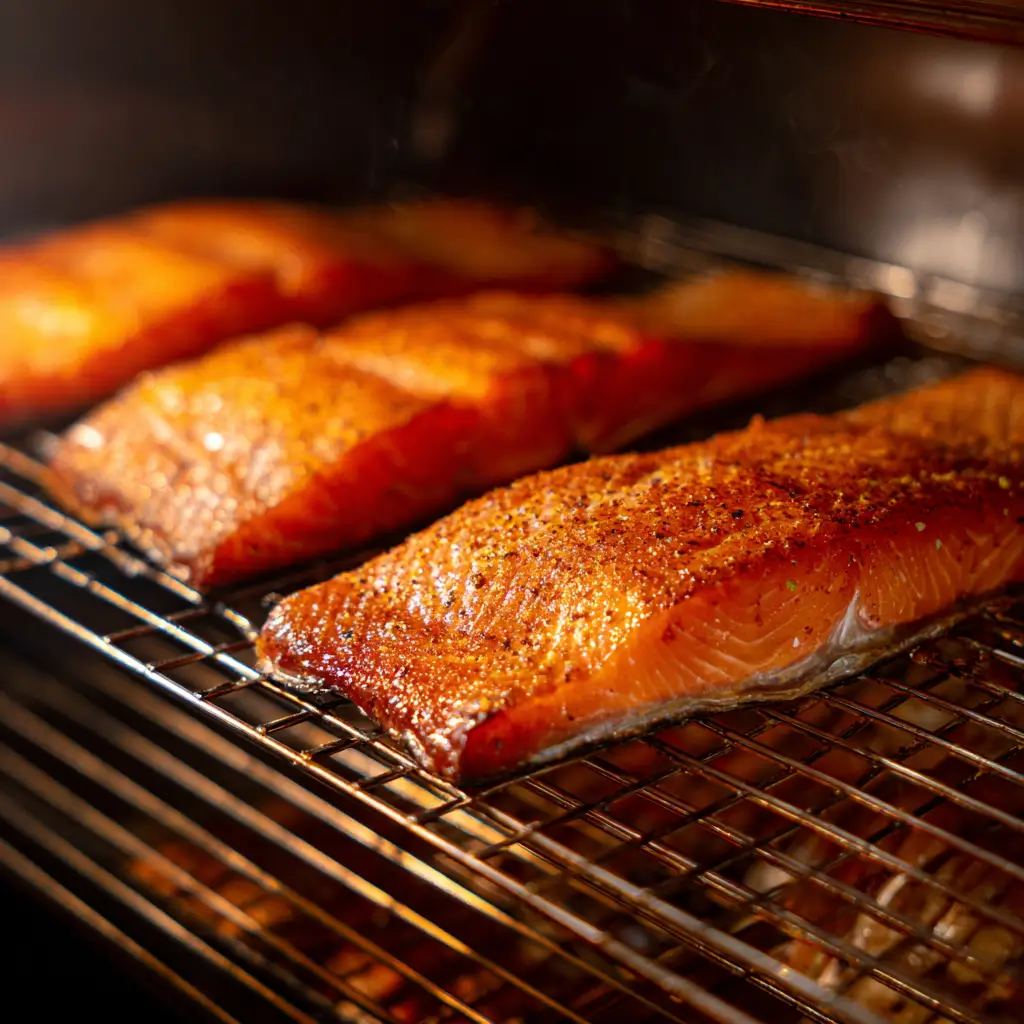
Hot smoking cooks the salmon while it smokes, using temperatures between 175°F and 200°F for a flaky, moist texture — perfect for easy home setups. Cold smoking, however, uses cooler air (below 90°F) and takes longer, creating that silky, lox-style finish. It requires more precise smoking salmon equipment, but the results are worth the patience.
Whichever method you choose, your success depends on mastering the balance of temperature, time, and smoke.
Essential Tools for Smoking Salmon at Home
Best Smoker for Salmon: Electric, Gas, or Charcoal?
When gathering the right tools for smoking salmon, the smoker itself is your foundation. The best smoker for salmon depends on how hands-on you want to be and the flavor you’re after.
Electric smokers are great for beginners — just set the temperature and let it work. They’re clean, consistent, and ideal for smaller spaces. Gas smokers heat up fast and offer steady control, making them perfect for quick sessions. For traditionalists, charcoal smokers are unbeatable, giving that deep, natural smokiness that defines classic salmon flavor.
Each type has its charm. Electric models make things easy, while charcoal gives you more control over depth and aroma. The key is choosing what feels comfortable for your style and time.

Learn more about flavor layering with our stewed salmon recipe — it’s a great example of how slow heat transforms texture and taste.
Must-Have Smoking Salmon Equipment
Beyond the smoker, you’ll need a few essentials to get the best results from your salmon smoking supplies:
| Tool | Why You Need It |
|---|---|
| Digital Thermometer | Keeps track of smoker and fish temperature for precision |
| Wire Racks | Let smoke circulate evenly around the salmon |
| Drip Pan | Catches fat and moisture, keeping cleanup easy |
| Wood Chips or Pellets | Infuse your salmon with distinctive smoky flavor |
| Heat-Resistant Gloves | Protect your hands when checking or rotating fish |
These pieces of smoking salmon equipment work together to give you full control from start to finish. They don’t have to be expensive — just dependable. A good thermometer and quality wood chips can elevate your smoked salmon from good to unforgettable.
Selecting the Right Wood for Salmon Smoking
Best Types of Wood Chips for Salmon Flavor
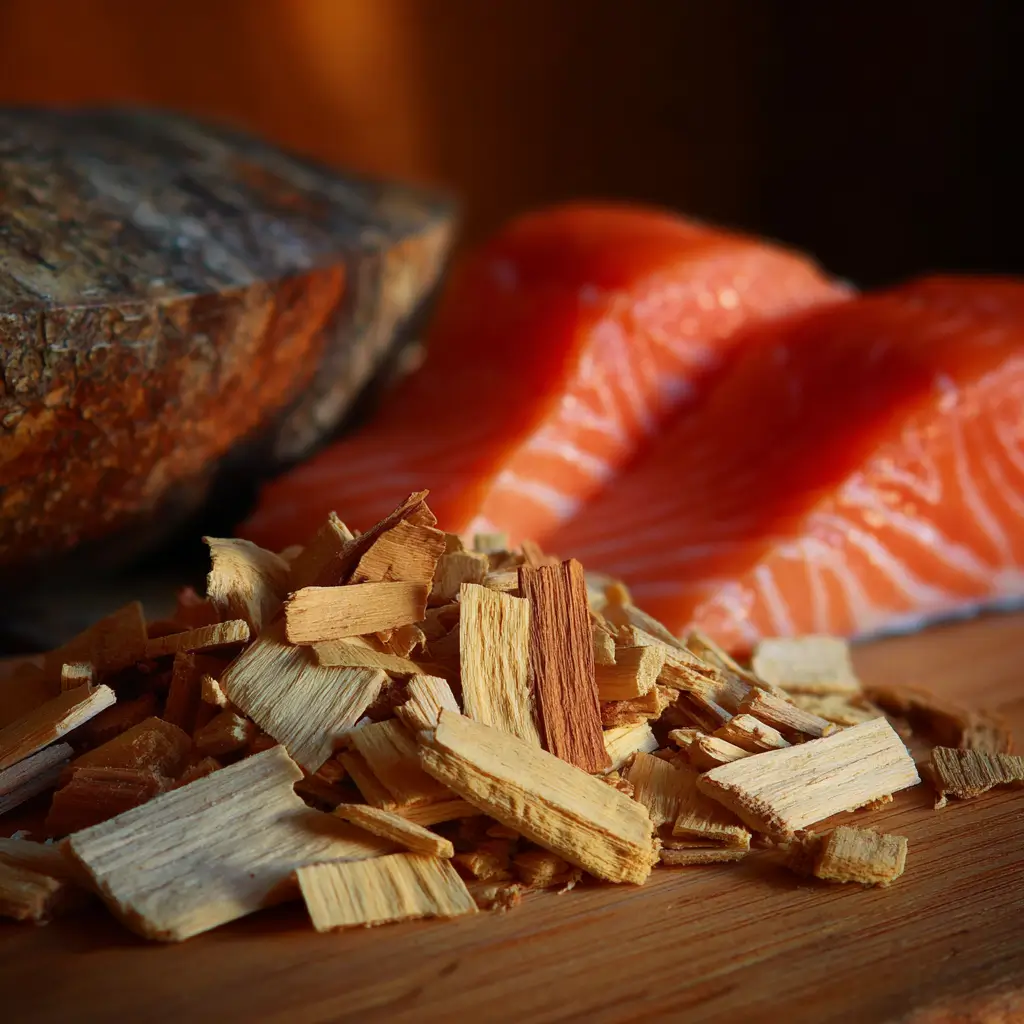
When using the right tools for smoking salmon, your choice of wood plays a huge role in defining the final flavor. Even the best smoker for salmon can’t deliver that perfect, balanced taste without the right kind of wood chips. Different woods release different aromas, giving your smoked salmon its signature sweetness, richness, or bite.
Below are some of the most popular options for anyone serious about home smoking:
| Wood Type | Flavor Profile | Ideal Use |
|---|---|---|
| Alder | Mild, sweet, and classic | Traditional salmon flavor |
| Applewood | Light and fruity | Smooth, delicate smoke for tender fillets |
| Cherry | Balanced and rich | Adds a deep color and subtle fruit note |
| Maple | Sweet and mellow | Perfect with maple-glazed salmon |
| Hickory | Bold and strong | Best when mixed with lighter woods |
If you’re building your own setup of smoking salmon equipment, keep alder and applewood on hand — they pair perfectly with salmon’s natural oils and textures. Hickory and oak can be great additions too, but they’re best used in moderation to avoid bitterness.
Don’t miss our easy salmon recipe bites for creative ideas that pair perfectly with alder-smoked fillets.
Wood Chip Preparation and Soaking Tips
No matter how advanced your tools for smoking salmon are, wood preparation still determines consistency. Many home smokers soak their chips for 30–60 minutes before use. Moist chips smolder longer, creating a steady stream of clean smoke that gently cooks the salmon.
For electric or pellet smokers — often considered the best smokers for salmon — dry chips may be better. They ignite faster, giving a sharper smoke flavor ideal for shorter cooking times. Try soaking your chips in apple cider, wine, or even beer for subtle aromatics that complement the fish’s natural flavor.
The beauty of smoking lies in experimentation. With a few well-chosen salmon smoking supplies and properly prepared wood, you can fine-tune both flavor and intensity to match your preferences perfectly.
Prepping Your Fish Before Smoking
Brining and Curing Supplies
Even with the best tools for smoking salmon, perfect flavor starts before the smoke ever begins. Brining or curing helps firm the fish and enhances its smoky depth. You’ll need a few basic salmon smoking supplies: coarse salt, brown sugar, and a non-metallic container.
For a simple wet brine, mix equal parts salt and sugar in water, then soak your salmon for 6–12 hours. Prefer a dry cure? Rub the fillet with the same mix and refrigerate for about 8 hours. Either way, rinse and pat dry before moving to the smoker.
Discover great ideas like our salmon poke recipe to see how fresh preparation impacts final flavor.
How to Season Salmon for Smoking
After curing, let your salmon air-dry on wire racks — a key piece of smoking salmon equipment — to form a sticky surface (the pellicle) that captures smoke beautifully. Then, season simply with pepper, dill, or lemon zest, or get creative with smoked paprika or garlic.
Once your salmon is ready, your tools for smoking salmon take over — steady heat, clean smoke, and patience will do the rest.
Setting Up Your Smoking Station
Salmon Smoking Setup: Tools and Organization
A smooth smoking session starts with a well-organized workspace. Whether you’re using an electric, gas, or charcoal setup, arranging your tools for smoking salmon properly makes the process cleaner, safer, and more enjoyable.
Choose a flat, ventilated outdoor area to position your smoker. Make sure you have a sturdy surface nearby for prepping and checking your salmon. Keep essentials like tongs, wood chips, gloves, and a thermometer within reach. A small table or rolling cart works great for holding your smoking salmon equipment, ensuring everything stays clean and accessible.
Your setup doesn’t have to be fancy — just functional. A consistent workflow helps you monitor temperature, smoke level, and timing without rushing. Once you’ve tried it a few times, setting up your station will become second nature.
Check out our smoked salmon and egg recipe to see how simple home smoking can turn everyday ingredients into something truly special.
Safety Gear and Temperature Monitoring Tools
Even with experience, safety is key when working around smoke and heat. Equip yourself with salmon smoking supplies like heat-resistant gloves, long-handled tongs, and a digital thermometer. These tools protect your hands and ensure your salmon smokes at the ideal temperature — typically 175°F to 200°F for hot smoking.
For precise control, use a thermometer with dual probes: one for the smoker’s internal heat and one for the thickest part of your salmon. This helps you avoid overcooking or drying out the fish.
Your tools for smoking salmon don’t just make things easier — they make them safer. With the right setup and preparation, you’ll have everything you need to create delicious, perfectly smoked salmon every time.
The Smoking Process Step-by-Step
How to Use Your Tools for Perfect Results
Once your fish is prepped and your tools for smoking salmon are in place, it’s time for the main event — smoking. Start by preheating your smoker to the right temperature. For hot smoking, aim for 175°F to 200°F; for cold smoking, keep it under 90°F. The temperature you maintain determines both the texture and flavor of your salmon.
Place the salmon skin-side down on the rack, leaving space between pieces for even airflow. Load your preferred wood chips — alder or applewood are excellent choices — into the smoker box. Then, close the lid and let your smoking salmon equipment do its work.
Avoid opening the lid too often. Each time you do, you lose valuable heat and smoke. Instead, monitor your progress using a thermometer probe inserted into the thickest part of the fish. When the internal temperature reaches 140°F, your salmon is fully smoked.
Tools for Smoking Salmon at Home

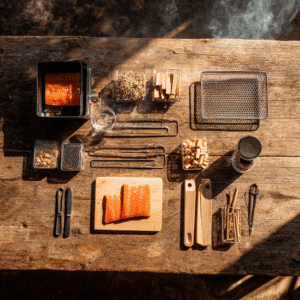
Equipment
- electric smoker beginner-friendly and consistent
- charcoal smoker adds deep, classic flavor
- digital thermometer for smoker and fish temperature
- wire racks helps smoke circulate evenly
- wood chips alder, applewood, cherry, hickory
- drip pan catches fat and moisture
- heat-resistant gloves safety when handling hot tools
- cold smoke generator for true cold smoking setups
- non-metallic container used for curing or brining salmon
Instructions
- Choose a smoker: electric for beginners, charcoal for flavor, gas for quick control.
- Gather essential equipment: thermometer, wire racks, wood chips, gloves, and drip pan.
- Select wood chips like alder, applewood, or cherry for balanced smoke flavor.
- Set up a safe and organized outdoor station with ventilation and prep table.
- Use safety gear like gloves and dual-probe thermometers for accuracy and protection.
- Maintain clean equipment. After each use, wash and dry racks, empty ash, and wipe smoker interior.
Notes
Don’t miss our cheesecake factory miso salmon to see how professional-grade results can start from simple home smoking techniques.
Temperature and Timing for Smoked Salmon
Timing varies depending on the cut and thickness, but generally, it takes about 1 to 3 hours to hot smoke a fillet. Thicker cuts require longer cooking times, while smaller pieces smoke faster and absorb more flavor.
If you’re using electric or pellet smokers — often the best smokers for salmon — maintaining a consistent temperature is easy. For charcoal models, you’ll need to adjust vents occasionally to control airflow. Keep an eye on smoke quality; light blue smoke means clean burning, while thick white smoke can turn your salmon bitter.
When finished, remove the salmon and let it rest for 15–20 minutes. This helps the oils settle, giving you that signature silky texture. With the right tools for smoking salmon, you’ll soon master that delicate balance between tenderness, smokiness, and flavor depth.
Troubleshooting and Maintenance
Common Mistakes and How to Fix Them
Even with great tools for smoking salmon, things don’t always go perfectly on the first try. Maybe your salmon turns out too dry, too smoky, or unevenly cooked — all common challenges for beginners. The good news? They’re easy to fix once you understand the cause.
Dry salmon usually comes from too much heat or too little moisture. Keep your smoker temperature steady between 175°F and 200°F, and use a drip pan with a bit of water to maintain humidity. Bitter flavors often mean the smoke was too heavy or your wood chips burned instead of smoldering. Try using smaller amounts of wood and ensure proper airflow through your smoking salmon equipment.
If your salmon looks pale or patchy, it likely didn’t form a proper pellicle before smoking. Make sure to air-dry your brined fish for at least an hour before it goes in. And don’t worry — with practice, your results will improve every time.
Learn more about recovery techniques in our how to smoke salmon without a smoker guide, where you’ll find clever fixes and workarounds for common issues.
Cleaning and Maintaining Your Smoker
Caring for your tools for smoking salmon keeps them efficient and extends their life. After every session, allow the smoker to cool before removing racks and drip pans. Wash them with warm, soapy water, then rinse and dry thoroughly to prevent rust or buildup.
Empty the ash pan (for charcoal models) and check for any grease residue that could cause flare-ups. Wipe down the smoker’s interior gently — you want to keep that seasoned coating that adds subtle flavor over time.
Regular maintenance doesn’t just make your smoker last longer; it keeps your smoked salmon tasting clean and pure. Remember, well-kept salmon smoking supplies lead to better results and a more enjoyable smoking experience every time.
Advanced Tips for Serious Smokers
Using Smokehouses and Advanced Equipment
Once you’ve mastered the basics, it’s time to upgrade your setup and explore advanced tools for smoking salmon. A small smokehouse or a high-end smoker with temperature zoning can give you incredible control over flavor and texture. These setups let you adjust airflow, humidity, and smoke density — all essential for achieving professional-grade results.
If you’re passionate about perfecting your craft, consider adding a cold smoke generator or an external smoke tube. These tools allow you to infuse rich, layered smoke without cooking the fish. The result? Deep, elegant flavor with that smooth, translucent texture cold-smoked salmon is known for.
Use a mix of wood chips to customize your flavor profile — for example, alder for body and applewood for sweetness. And remember, precision tools like digital thermometers and hygrometers can help maintain ideal conditions inside your smoker or smokehouse.
Discover flavor layering ideas in our DIY smoked salmon guide, perfect for anyone ready to experiment with new equipment and advanced techniques.
Experimenting with Flavors and Smoking Styles
Part of the fun of using professional-grade smoking salmon equipment is the freedom to experiment. Try brining your salmon with maple syrup, honey, or citrus zest for a sweet twist, or use cracked pepper and garlic for something bolder. Layering flavors lets you create your own signature smoked salmon recipe.
You can also experiment with dual smoking methods — start with cold smoking to infuse aroma, then finish with a short hot smoke for firmness. This hybrid technique, used by many chefs, delivers incredible texture and balanced flavor.
No matter how advanced your setup becomes, remember that patience, consistency, and quality ingredients always matter more than expensive gear. When you know how to use your tools for smoking salmon with care and creativity, every batch can be your best yet.
FAQs About Tools for Smoking Salmon
Is it cheaper to smoke your own salmon?
Yes, it usually is. Buying pre-smoked salmon can get expensive, especially if you enjoy it often. Once you invest in basic tools for smoking salmon — like a reliable smoker, thermometer, and a few essential salmon smoking supplies — your cost per batch drops dramatically. Plus, you control the ingredients, wood flavor, and freshness. Over time, home smoking becomes not just cheaper but more satisfying.
How to smoke salmon in a smokehouse?
Using a smokehouse gives you more control and space to experiment. Start by brining and drying your salmon as usual, then hang or place the fillets on racks inside your smokehouse. Maintain the temperature around 175°F for hot smoking or below 90°F for cold smoking. A good set of tools for smoking salmon, including a temperature gauge, smoke generator, and proper ventilation, helps you achieve that perfect balance of tenderness and smokiness.
What kind of smoke is best for salmon?
Light, clean smoke is ideal — think applewood, alder, or cherry. These produce mild, sweet notes that complement salmon’s natural oils without overpowering them. Avoid heavy smoke from woods like hickory or mesquite unless you blend them with lighter chips. Your smoking salmon equipment should always produce thin, blue smoke — a sign that your wood is burning efficiently and cleanly.
What do you need to smoke fish?
At minimum, you need a smoker, wood chips, racks, and a thermometer — the core tools for smoking salmon. A drip pan, heat-resistant gloves, and quality curing supplies make the process smoother and safer.
Whether you use an electric smoker on your patio or a full smokehouse setup, consistency and patience are key. Check out our beginner smoked salmon recipe for a simple guide to starting at home.
Conclusion
Smoking salmon at home is as much about patience as it is about precision. With the right tools for smoking salmon — from your smoker and wood chips to curing supplies and thermometers — you can create smoky, tender, restaurant-quality fish anytime.
Whether you’re experimenting with new woods, perfecting your brine, or exploring cold smoking, the process becomes more rewarding with each batch. Most importantly, your setup doesn’t need to be fancy. A few reliable pieces of smoking salmon equipment and your growing experience will take you far.
Looking for inspiration? Follow us on Facebook for community tips, and explore our Pinterest boards for flavor ideas and wood pairings that spark creativity.